
The Power of Repetition: Why Showing Up is Half the Battle in Martial Arts
You’ve probably heard the saying “practice makes perfect” about a million times. And honestly? It’s kind of annoying because it sounds so cliché. But here’s the thing, when it comes to martial arts, there’s some serious truth behind those three little words. Except we’d tweak it a bit: practice makes permanent.
Whether you’re a parent watching your child learn their first kicks or an adult stepping onto the mat for the first time, understanding the power of repetition can completely change how you approach training. Let’s dig into why showing up consistently is literally half the battle, and how it transforms not just your techniques, but your entire mindset.
Your Brain on Repetition: The Science That Makes It Stick
When you first learn a martial arts technique, let’s say a front kick, your brain is working overtime. You’re consciously thinking about every single movement: chamber your knee, extend your leg, make contact with the ball of your foot, rechamber, set it down. It’s exhausting just thinking about all those steps, right?
But here’s where it gets cool. Every time you repeat that kick, your brain is literally rewiring itself. You’re creating and strengthening neural pathways, think of them as highways in your brain that carry information. The more you practice, the wider and more efficient these highways become.

Your nervous system also builds something called myelin around these pathways. Myelin is like the insulation around electrical wires, it makes signals travel faster and more efficiently. That’s why after hundreds or thousands of repetitions, you can execute a perfect front kick without thinking about each individual step. Your brain has moved the action from the “conscious thought” department to the “automatic habit” zone.
This is what we call muscle memory, and it’s not actually your muscles remembering, it’s your brain becoming so efficient at sending the signals that the movement feels effortless.
Why Showing Up Regularly Actually Matters
Okay, so science is cool and all, but what does this mean for your training schedule? Everything.
You can’t build those neural pathways in one or two sessions a month. It’s like trying to create a hiking trail by walking it once every few weeks, the path keeps growing over with weeds, and you’re constantly starting from scratch.
When you show up to class regularly, ideally two to three times per week, you’re reinforcing those pathways before they have a chance to fade. Each class builds on the last one. That kick you struggled with on Monday becomes slightly smoother on Wednesday. By Friday, it’s starting to feel natural.
Consistency beats intensity every single time. It’s better to train twice a week for six months than to cram in daily sessions for two weeks and then disappear. Our students in Virginia Beach and Chesapeake who see the most dramatic improvements? They’re the ones who make martial arts a regular part of their routine, not an occasional hobby.
From Conscious Effort to Instinctive Response
Here’s where repetition really shows its power: under pressure.
Imagine you’re in a self-defense situation (hopefully you never are, but that’s why we train). Do you think you’ll have time to consciously think through the steps of blocking and countering? Absolutely not. Your response needs to be automatic, instinctive.
That only happens through repetition. When techniques are drilled hundreds of times, they become accessible even when you’re stressed, distracted, or in a high-pressure situation. Your body knows what to do because you’ve trained it to respond automatically.
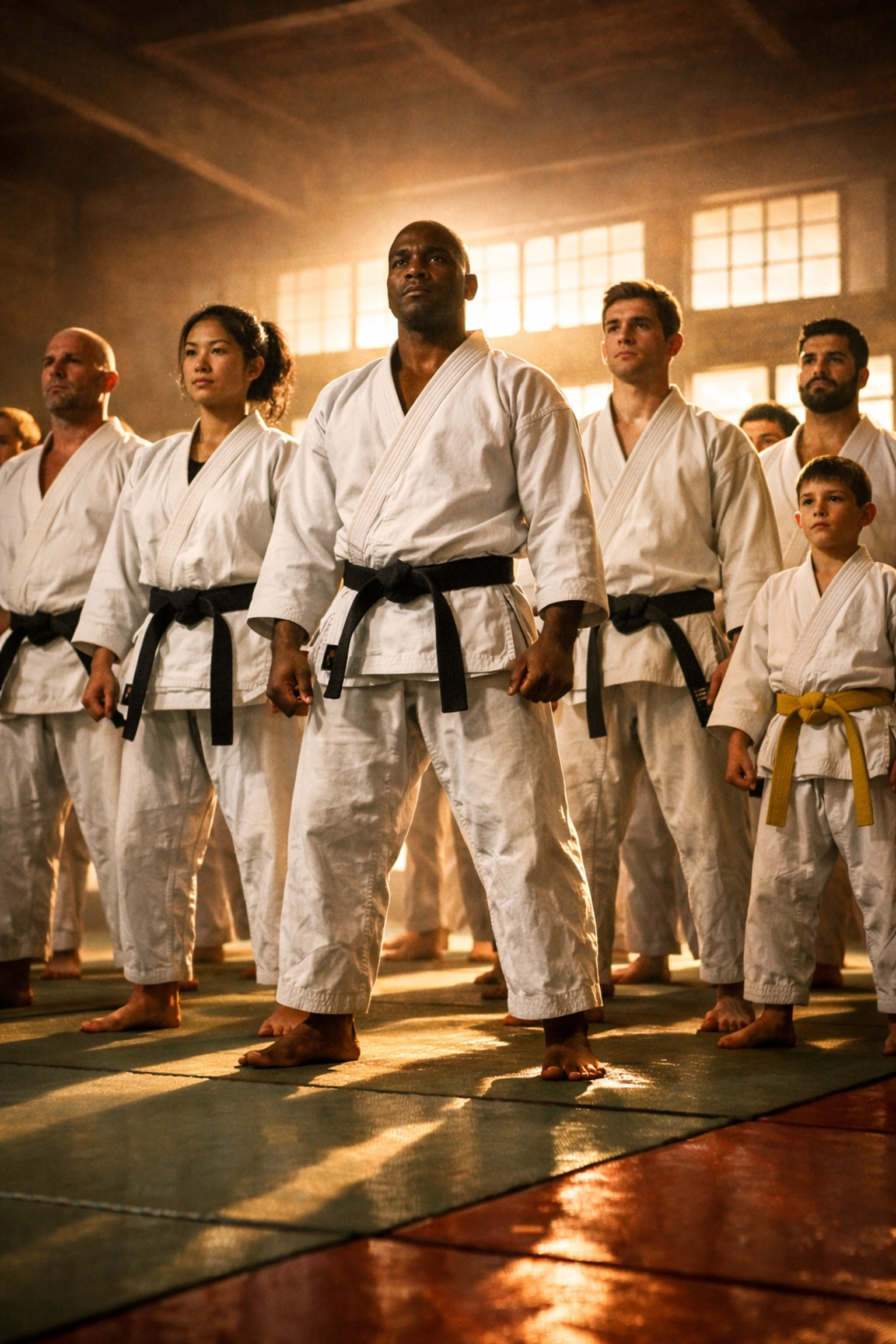
This applies to kids dealing with bullies, too. A child who has practiced their verbal assertiveness techniques and boundary-setting stances repeatedly will be able to access those tools in the moment when someone’s bothering them on the playground. The repetition builds confidence because they know their body and voice will do what they’ve trained them to do.
The Character-Building Side of Repetition
Now let’s talk about something equally important: how repetition shapes who you are, not just what you can do.
When you commit to showing up to class regularly, you’re not just learning kicks and punches. You’re building discipline. You’re teaching yourself that consistency matters more than motivation. Some days you won’t feel like training. You’ll be tired, busy, or just not in the mood. But you show up anyway, and that’s where the real growth happens.
Repetition teaches resilience. Every martial artist hits plateaus where progress seems to stall. You’re drilling the same techniques, but you’re not seeing improvement. This is exactly when most people quit. But those who push through, who keep showing up and keep repeating, break through to the next level. That resilience carries over into school, work, relationships, and every other challenging situation life throws at you.
It also develops focus. In a world of constant distractions and instant gratification, the ability to focus on one task repeatedly is becoming a superpower. When you’re practicing the same form for the twentieth time in a month, you’re training your brain to concentrate, pay attention to details, and find subtle improvements in what you’re doing.

Breaking Through Plateaus: When Repetition Feels Boring
Let’s be real for a second, sometimes repetition can feel boring. You might think, “I’ve done this kick a thousand times. Can’t we move on to something more exciting?”
This is actually where the most important learning happens. When you’ve moved past the beginner excitement and you’re in the grind of repetition, you’re refining your technique. You’re finding and fixing inefficiencies in your movement. You’re adding power, speed, and precision to techniques you already “know.”
In traditional martial arts systems, there are practitioners who have been doing the same basic techniques for decades, and they’ll tell you they’re still discovering new layers of understanding. There’s a reason instructors say that the most advanced thing you can do is perfect the basics.
Every time you repeat a technique, you have the opportunity to do it slightly better than the last time. Maybe your stance is an inch wider. Maybe your hip rotation is smoother. Maybe your breathing is more controlled. These micro-improvements stack on top of each other, and over months and years, they transform you from a beginner into a martial artist.
The Compound Effect: Small Efforts, Big Results
Think about this: if you attend class twice a week, that’s approximately 100 classes per year. If each class includes drilling a specific technique 50 times, that’s 5,000 repetitions of that technique in a single year. Add in practice at home, and those numbers get even bigger.
This is the compound effect in action. Small, consistent efforts create massive results over time. You don’t become a black belt in one dramatic training session, you become a black belt through a thousand regular training sessions.
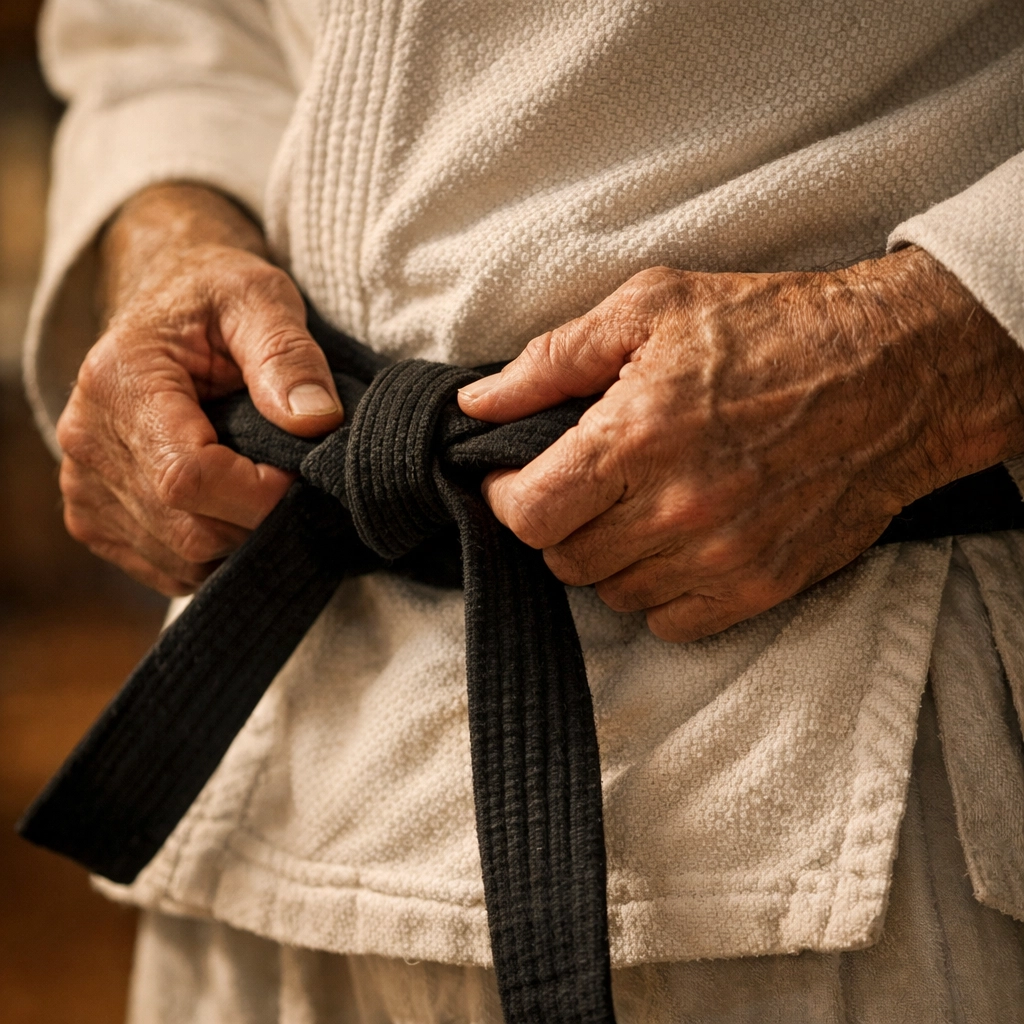
For parents in our Chesapeake and Virginia Beach locations watching your children train, this is why we emphasize attendance so strongly. We’re not just teaching your kids martial arts techniques, we’re teaching them that showing up consistently, putting in the work repeatedly, and staying committed even when it’s hard leads to success. That’s a life lesson that applies to everything they’ll ever do.
Making Repetition Work for You
So how do you harness the power of repetition in your own martial arts journey?
Set a realistic schedule and stick to it. Don’t commit to five classes per week if you know that’s not sustainable. Start with two or three and make it non-negotiable. Treat your training like an important appointment, because it is.
Focus on quality over quantity. A hundred sloppy kicks don’t build muscle memory, they build bad habits. Pay attention to form and technique with every repetition. This is why training in a structured class environment matters, you’ve got instructors watching and correcting your form before bad habits get ingrained.
Embrace the process, not just the outcome. Yes, earning new belts is exciting. But the real transformation happens in all those regular classes between belt tests. Learn to find satisfaction in the daily practice, in feeling yourself get slightly stronger or more coordinated week by week.
Be patient with plateaus. When progress stalls, that’s not a signal to quit: it’s a signal that you’re about to break through to a new level. Keep showing up. Keep repeating. The breakthrough is coming.
The Bottom Line
Repetition isn’t the boring part of martial arts: it’s the whole point. It’s how your brain learns, how your body develops muscle memory, and how your character grows stronger.
At Changing Lives Martial Arts, we’ve seen it happen hundreds of times with students throughout Virginia Beach and Chesapeake. The students who transform the most aren’t always the most naturally athletic or coordinated. They’re the ones who show up consistently, put in the reps, and trust the process.
Whether you’re looking to build your child’s confidence, learn practical self-defense skills, or develop mental toughness that carries over into every area of life, the path is the same: show up, practice, repeat.
Because at the end of the day, showing up really is half the battle: and the other half is just showing up again tomorrow.
Ready to experience the power of consistent training? Join our community and discover what regular practice can do for you and your family.